
I am a ML/Computer Vision (CV) Engineer with 3+ years of production ML and research experience specializing in real-time video surveillance and video analytics systems. Proven experience for AI optimization and enterprise Vision AI solutions.
• Published 2 SCI papers on federated and reinforcement learning for resource-efficient surveillance systems.
• KISA-certification acquired in intelligent CCTV performance testing (RGB/IR intrusion, loitering detection).
• Expert in developing / deploying highly accurate and scalable CV models using PyTorch and OpenCV for safety-critical surveillance applications.
About

Tools / Frameworks

Python

PyTorch

TensorFlow

ONNX

OpenCV

NumPy

Ultralytics

Git

GitHub

Docker

MLFlow

AWS

Ubuntu

CUDA
SKILLS
Programming / Software Engineering75%
Data Handling / Preprocessing85%
Mathematics / Statistics80%
Machine Learning82%
Deep Learning91%
MLOps70%
Problem-Solving93%
Communication / Collaboration90%
Projects
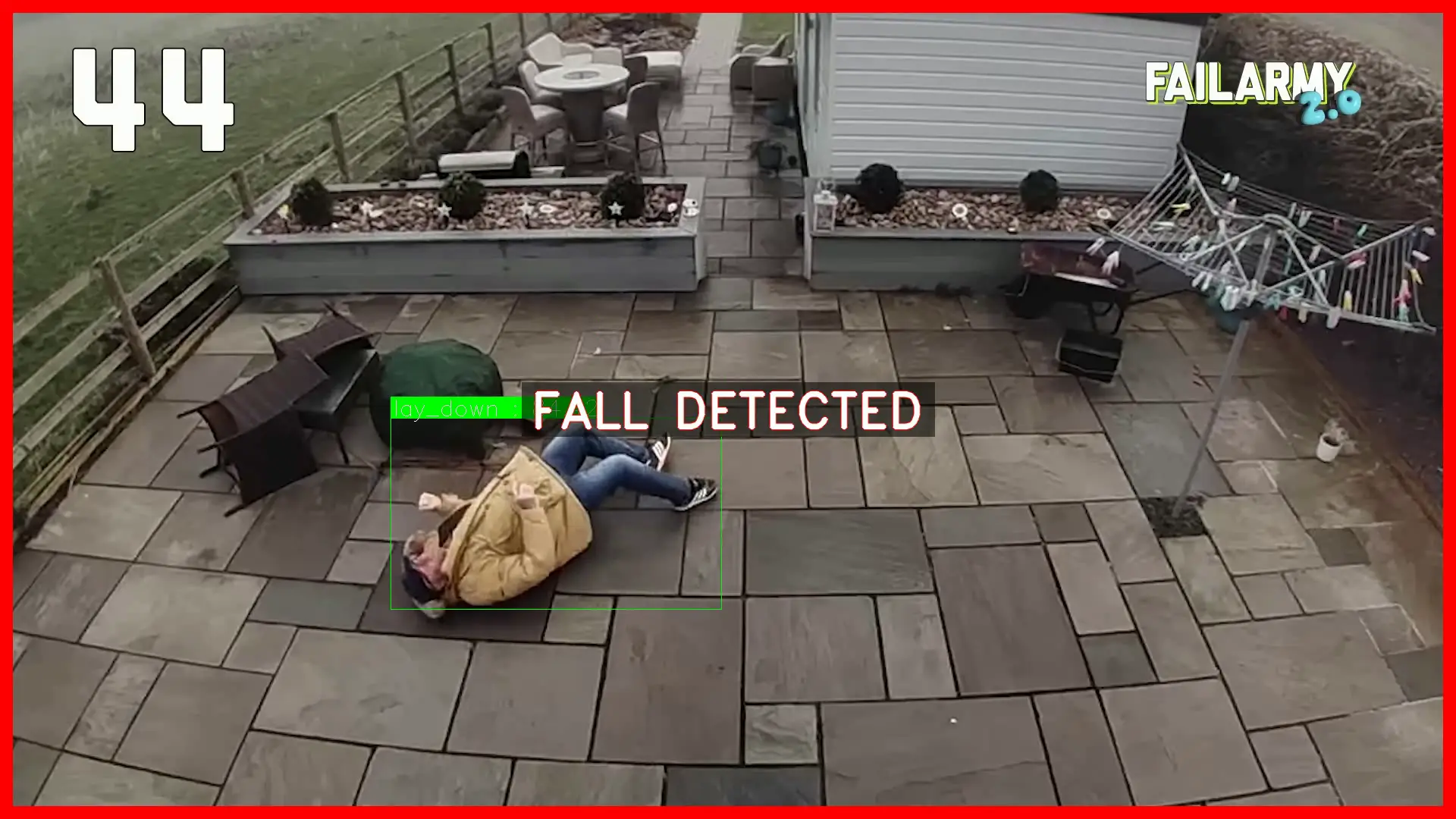
Surveillance Fall-Down Detection
Real-time fall-down detection system built for the AXEyes video analytics platform, achieving 89.7% mAP using YOWOv3 spatio-temporal action recognition across multi-frame sequences. Trained on a custom CCTV surveillance dataset covering diverse fall scenarios and environments, with frame-sequence confidence aggregation reducing false alerts by 19%.
Read More GitHub
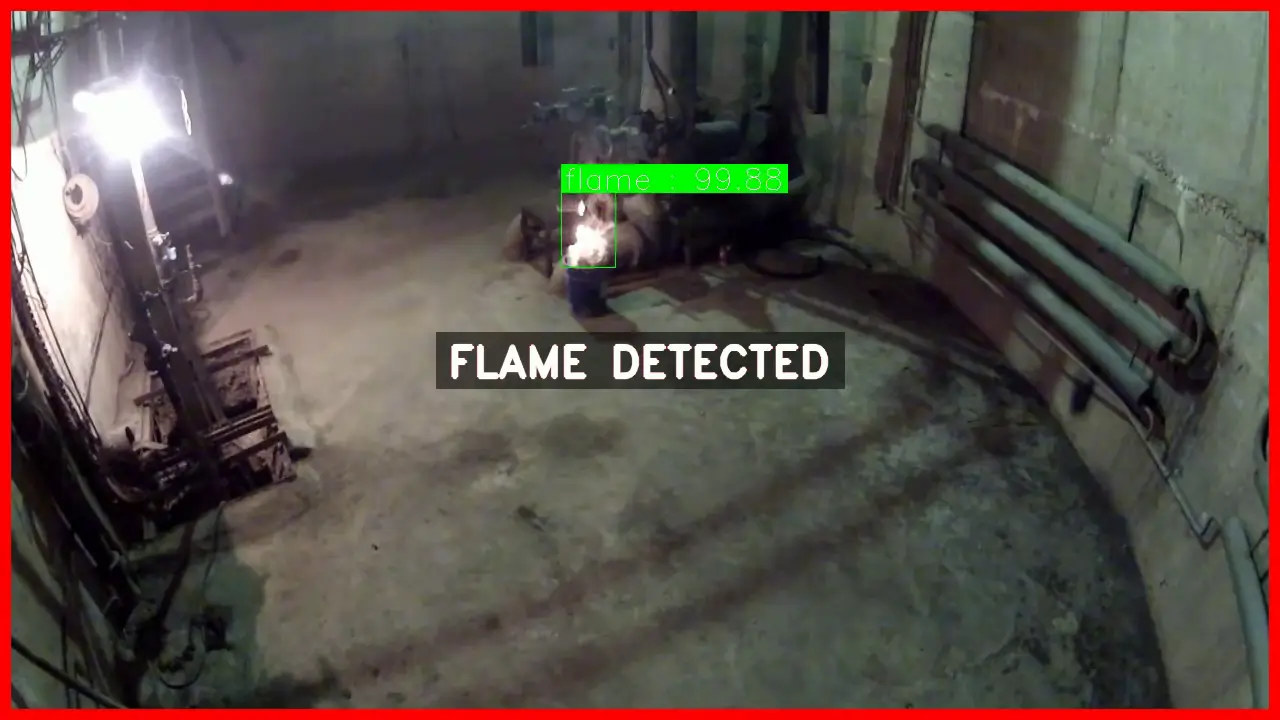
Real-Time Fire-Smoke Detection
Real-time fire and smoke detection system built for the AXEyes video analytics platform, achieving 89% mAP using YOWOv3 spatio-temporal action recognition. A custom fire-smoke video dataset was curated from real surveillance footage. Deployed in production monitoring 100+ critical infrastructure CCTV cameras around Korea with 25% false alert reduction through frame-sequence analysis.
Read More GitHub
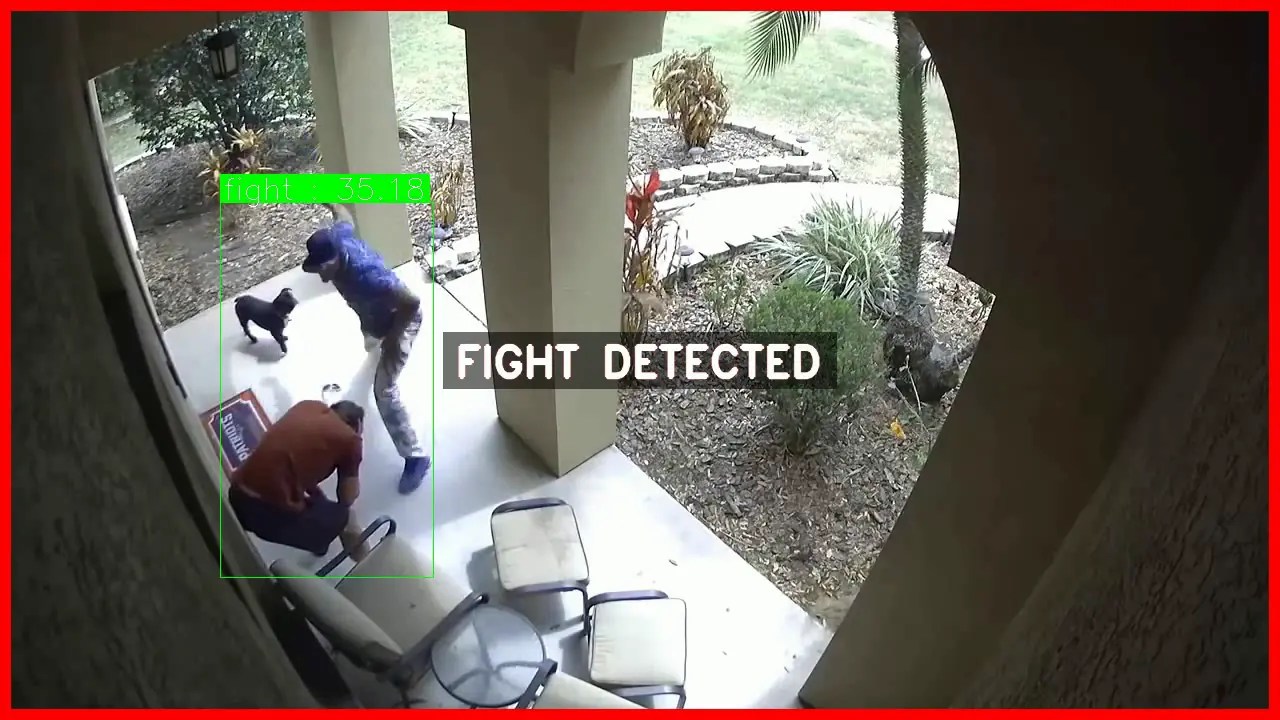
Real-Time Violence (Fight) Detection
Real-time violence (fight) detection system built for the AXEyes video analytics platform, achieving 92.1% mAP using YOWOv3 spatio-temporal action recognition across multi-frame sequences. Trained on a custom CCTV surveillance dataset covering diverse fight scenarios under varied lighting, camera angles, and with frame-sequence confidence aggregation reducing false alerts by 19%.
Read More GitHub
Research
Deep Reinforcement Learning-Empowered Cost-Effective Federated Video Surveillance Management Framework 2024
Journal: Sensors, MDPI | Process: Published (SCI/E), IF 3.275-Q2
Author(s): Dilshod Bazarov, Alaelddin F. Y. Mohammed, TaeHeum Na and Joohyung Lee (corresponding author)
Link: 10.3390/s24072158
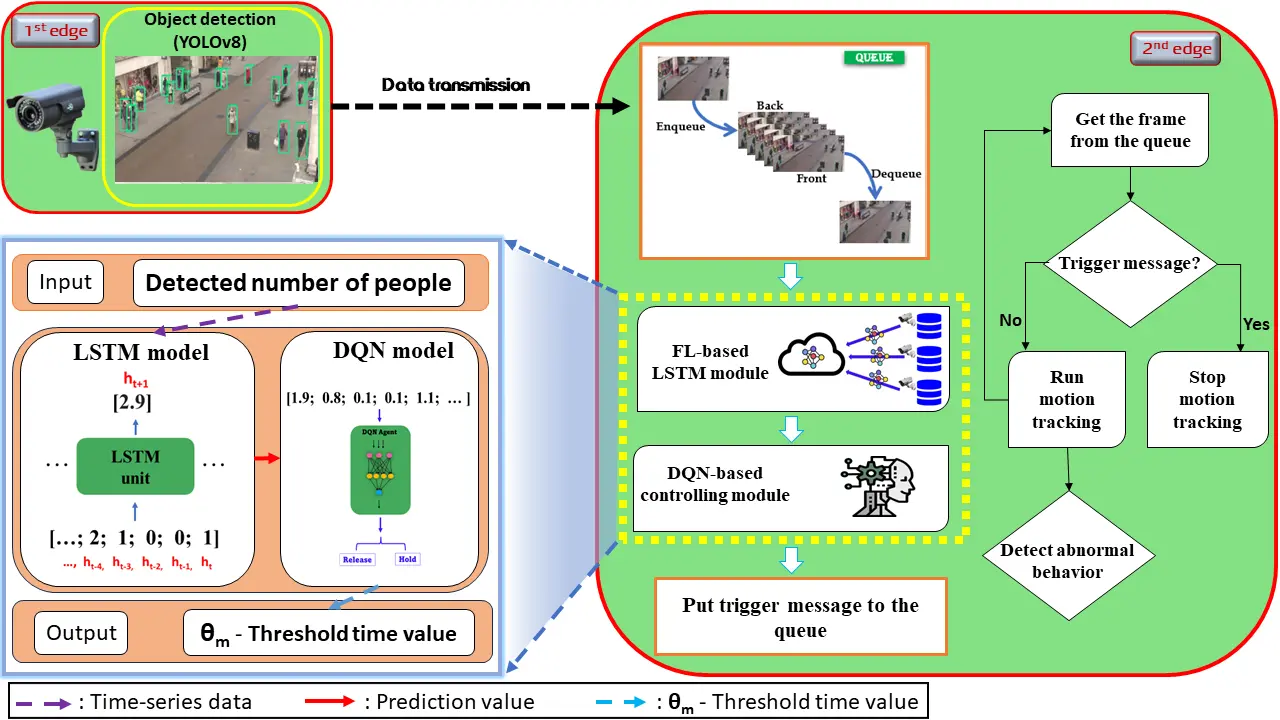
The study introduces a novel, cost-effective federated video surveillance management framework that optimizes GPU usage and reduces energy consumption by 5% through a two-tiered edge computing architecture and dynamic threshold control using Deep Q-Networks and federated learning.
Cognitive Video Surveillance Management in Hierarchical Edge Computing System with Long Short Term Memory Model 2023
Journal: Sensors, MDPI | Process: Published (SCI/E), IF 3.275-Q2
Author(s): Dilshod Bazarov, Jingyeom Kim, Alaelddin F. Y. Mo. and Joohyung Lee (corresponding author)
Link: 10.3390/s23052869
The proposed CogVSM framework for deep learning-based video surveillance in smart cities uses an LSTM model to predict object appearance patterns, dynamically manage GPU resources, and reduce memory usage by up to 32.1% compared to the baseline and 8.9% compared to previous methods, achieving a root-mean-square error of 0.795.